Vibe Coding Lowered the Barrier to Building — But Raised the Bar for Thinking
Originally published on Medium: https://medium.com/design-bootcamp/vibe-coding-lowered-the-barrier-to-building-but-raised-the-bar-for-thinking-78ba08dbbb42?source=rss-6c5be1f9757d------2
Vibe Coding Lowered the Barrier to Building — But Raised the Bar for Thinking
I didn’t start this project to explore AI tools.
I started it because I was curious about what happens when building becomes easier — but thinking doesn’t.
Using vibe coding, I designed and built an AI-integrated trip planner.
What stayed with me wasn’t the speed of execution, but the design questions that became harder to ignore.
The Product, Briefly
The product itself is relatively simple.
A user types something like “three days in Paris,” and the system automatically generates a complete travel routine.
Based on inferred intent and ongoing interaction, the interface adapts — surfacing different dashboards, priorities, and structures for different users.
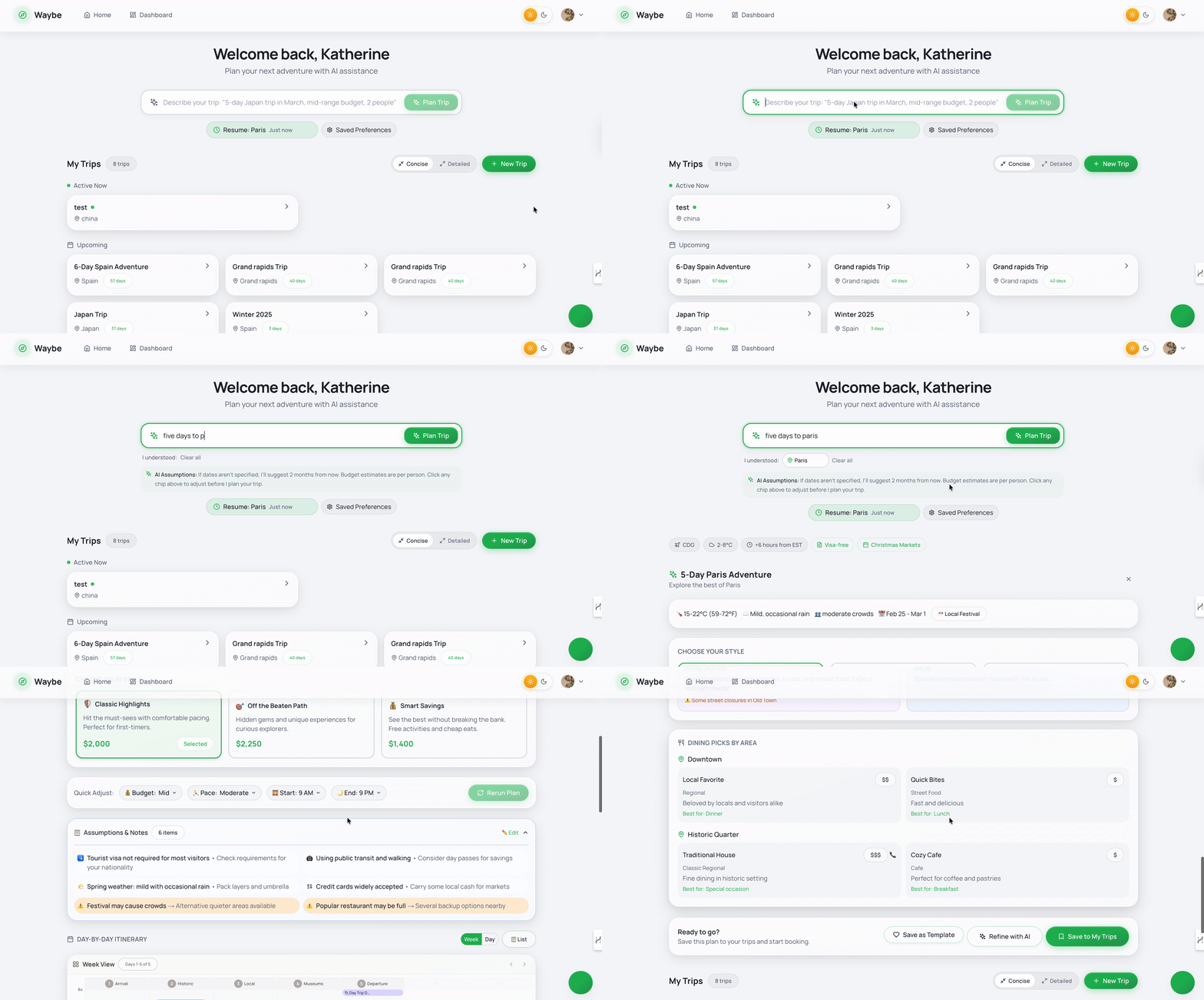
AI trip planner feature
There are no long setup flows.
No predefined templates to configure upfront.
The system starts minimal, then grows with the user.
But the most interesting part of this project wasn’t what the system could generate.
It was how vibe coding changed the way I had to think about building products.
From there, three questions kept coming back.
1. Vibe Coding Makes Building Easier — and Creation More Necessary
Vibe coding dramatically lowers the barrier to building.
As a designer, I could:
- Turn an idea into a working product
- Test assumptions without waiting for engineering support
- Move from concept to interaction in hours instead of weeks
This has triggered a familiar anxiety:
“Designers will be replaced by AI.”
I don’t think that’s what’s happening.
What is being replaced is the role of designers who only produce static artifacts — screens, flows, and handoff files disconnected from real systems.
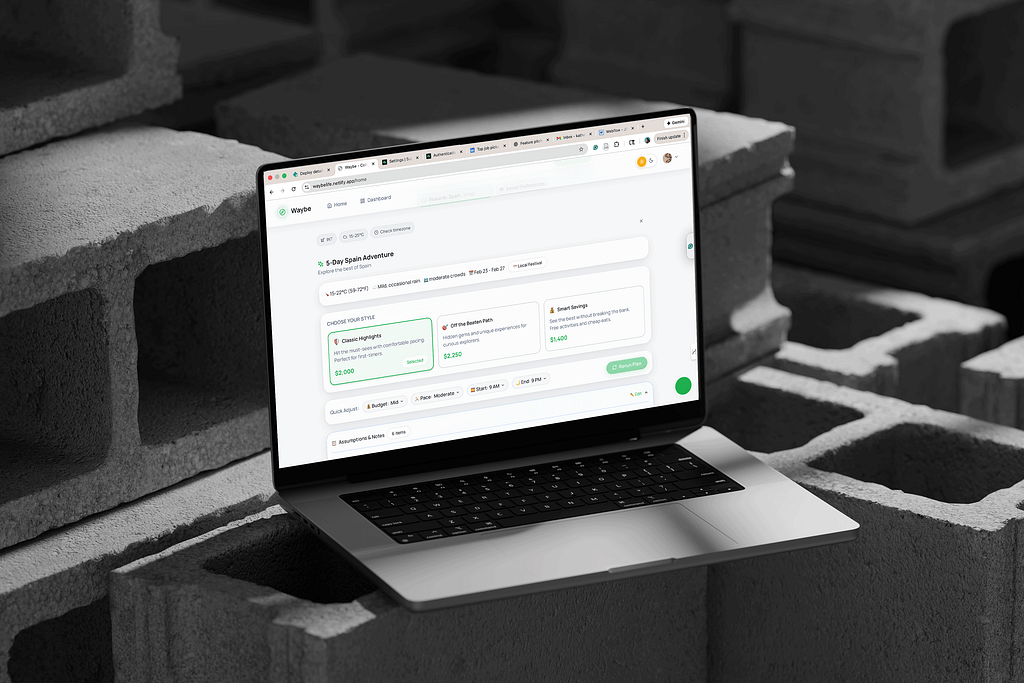
My Product: Waybe
What the world still needs are creators:
people who can think, design, build, test, and iterate.
In other words, designers who are also technologists.
Vibe coding doesn’t eliminate designers.
It filters them.
2. AI Can Build Features — But It Can’t Decide Whether They Should Exist
With AI, adding features is effortless.
You can ask for:
- Another recommendation layer
- A smarter dashboard
- More personalization logic
And within minutes, it exists.
That’s exactly why product thinking becomes more important, not less.
Even when AI can generate a feature, designers still have to ask:
- Do users actually need this?
- Is this the simplest possible solution?
- Does this match how users naturally think and behave?
But one question turned out to be more important than all the others:
Can this feature be deleted?
During this project, I found myself removing features far more often than adding them.
Not because they were hard to build — but because they didn’t earn their place.
In an AI-powered workflow, restraint becomes a design skill.
Deletion becomes a product decision.
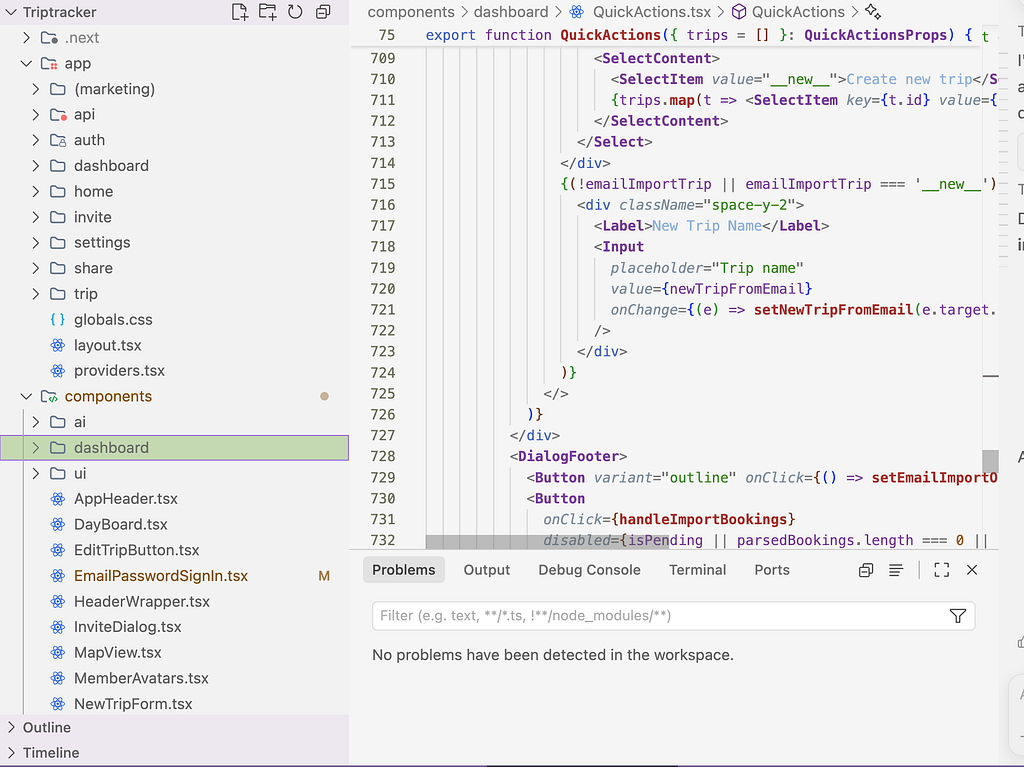
Windsurf building Interface
3. Adaptive UI and Contextual Awareness Are Promising — but Not Neutral
This project explored adaptive, context-aware UI instead of static dashboards.
Different users see different interfaces because:
- Their trip length is different
- Their interactions reveal different priorities
- Their behavior reshapes what the system surfaces next
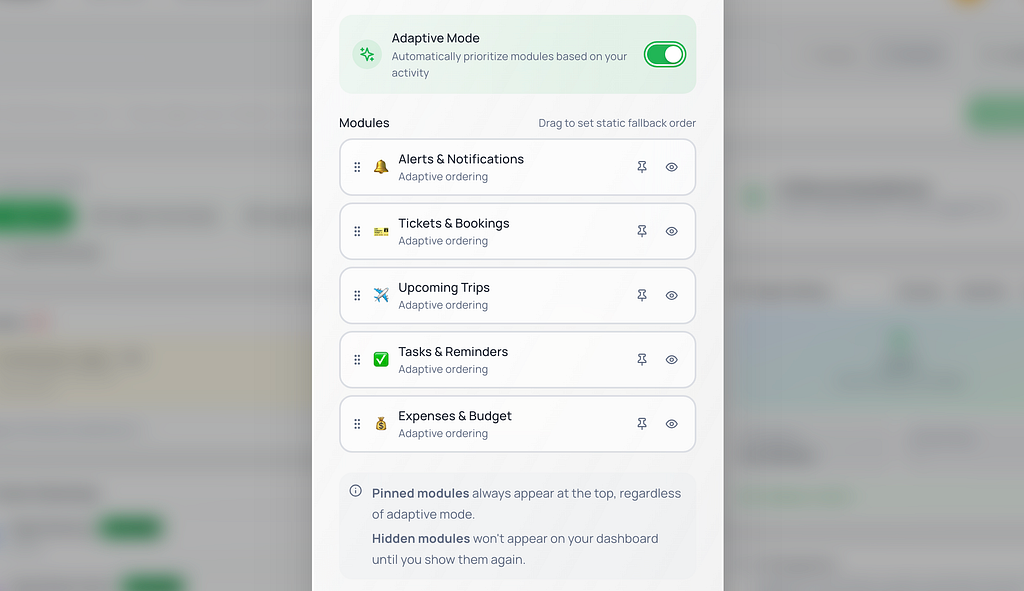
Adaptive UI
AI finally makes this level of personalization feasible.
But it also introduces a new tension.
If a system always adapts to user behavior, does it still guide the user?
Some users don’t actually know what they want.
Some benefit from constraints, defaults, and gentle structure.
A fully reactive system might feel intelligent — but also disorienting.
The real challenge isn’t building adaptive UI.
It’s deciding how much the system should adapt, and when it should lead.
This balance is where future UX work becomes truly interesting.
Final Thoughts
Vibe coding didn’t just help me build faster.
It forced me to think harder.
When almost anything can be built:
- Judgment matters more than execution
- Restraint matters more than capability
- Thinking matters more than tooling
The tools have changed.
The responsibility of designers — and creators — has not.
I’m a UX designer exploring how AI, systems thinking, and product design intersect. This project is one step in that exploration.
Vibe Coding Lowered the Barrier to Building — But Raised the Bar for Thinking was originally published in Bootcamp on Medium, where people are continuing the conversation by highlighting and responding to this story.