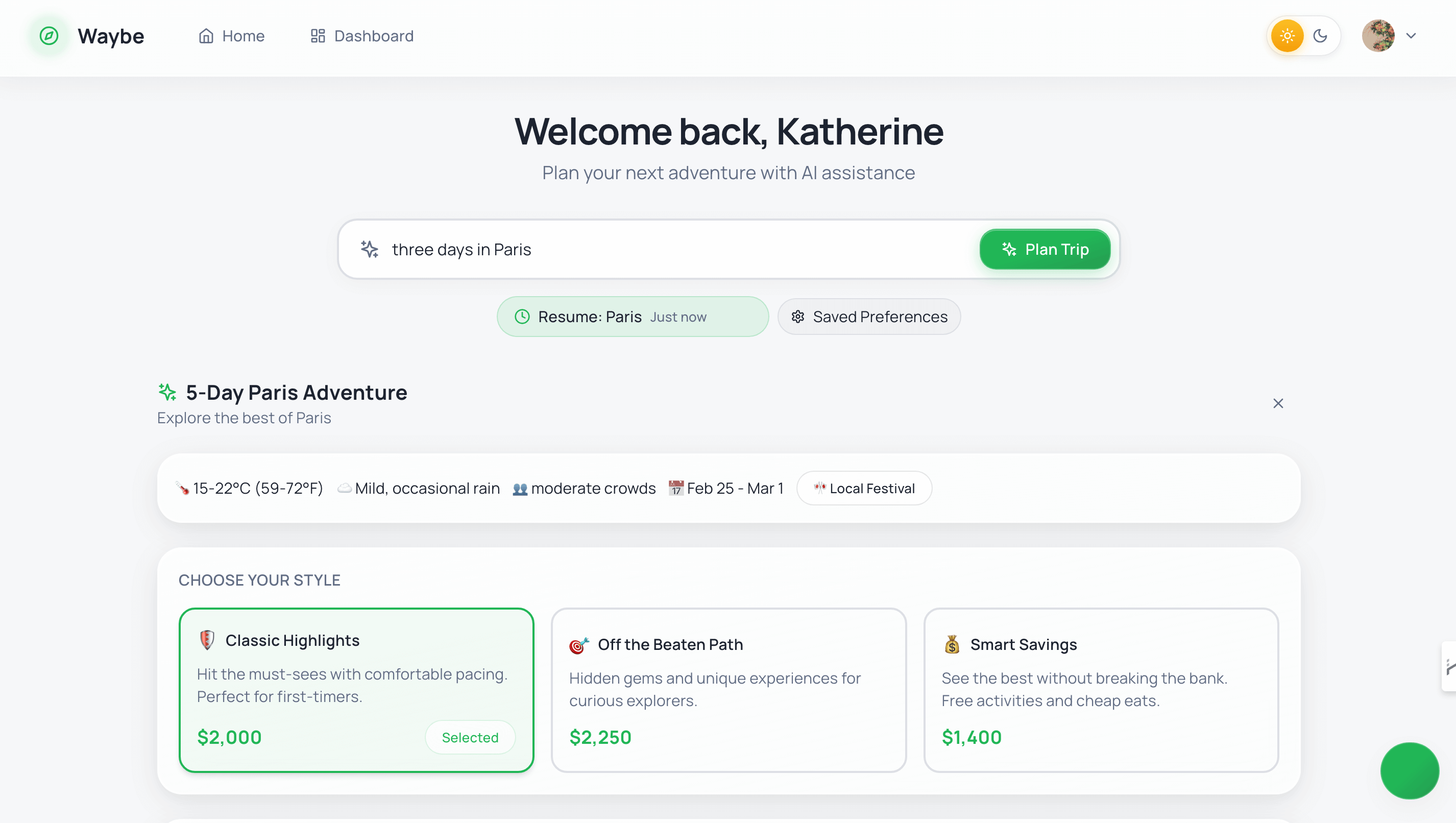
Context-Aware AI Trip Planner
Designing adaptive UI and decision-making systems in an AI-powered workflow.

Overview
This project explores how AI can shape product decisions, not just generate content.I designed and built a web-based AI trip planner that adapts its interface based on user context and behavior, instead of relying on static dashboards or predefined templates.The goal was to reduce planning friction while maintaining clarity and user control.
Problem
Most trip planners treat planning as a configuration task. Users are asked to:
- Set preferences upfront
- Choose templates
- Manually adjust rigid itineraries
Solution
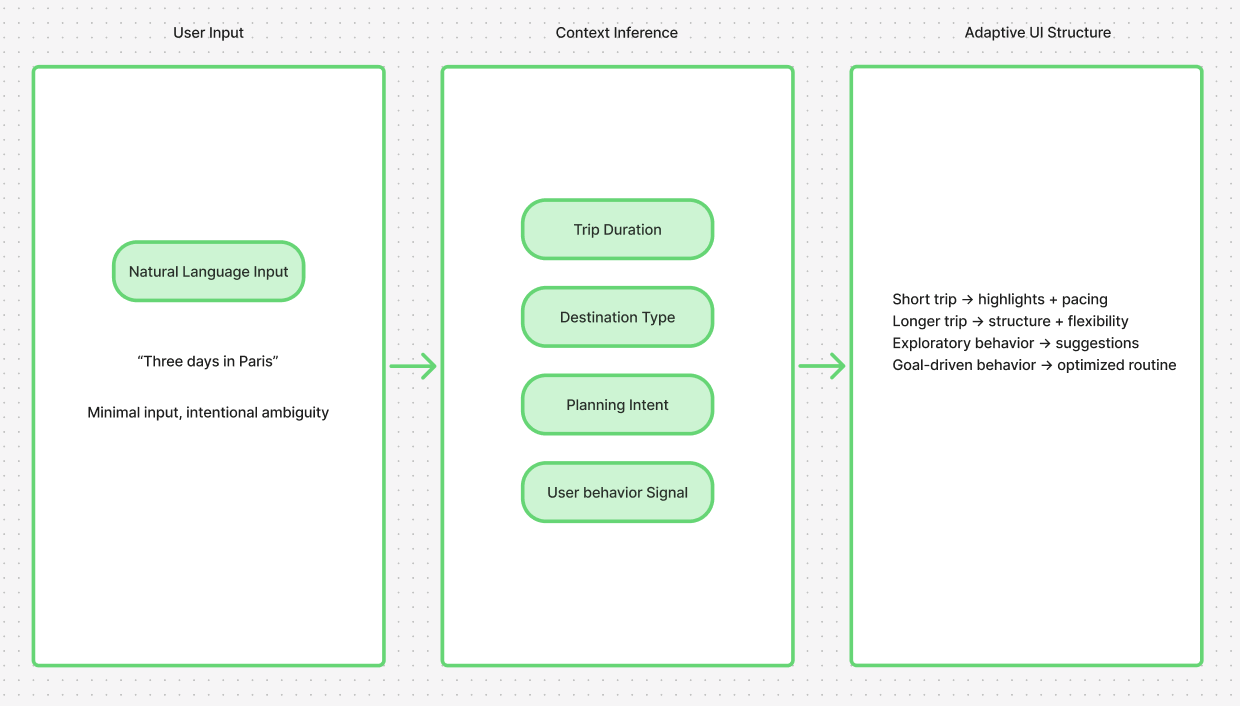
The experience starts with a single natural-language input: “Three days in Paris.”
From this input, the system infers trip context and dynamically adapts the interface as users interact.
Instead of one fixed dashboard, different users see different structures based on: Trip duration Interaction patterns Emerging priorities
The interface evolves with the user.
Key Design Decisions
Progressive disclosure The system avoids upfront configuration and reveals information gradually.
Behavior-driven UI Layouts adapt based on interaction instead of predefined personas.
Designing with restraint In an AI workflow, adding features is easy. The harder—and more important—decision was choosing what to remove.
For every feature, I asked: “Does this improve decision-making, or add noise?”
Outcome
The result is a lightweight, adaptive planning experience that: Reduces upfront effort Responds to user context Prioritizes clarity over feature abundance
More importantly, this project reflects how I approach AI-powered design: AI as a collaborator that amplifies judgment—not a shortcut for thinking.