Cha Yan Yue Se:Self-Initiated Mobile Concept
Scaling a digital ordering system through UX and business-driven decisions

Overview
Cha Yan Yue Se is a self-initiated product exploration focused on reimagining how a culturally rooted tea brand could translate into a North American mobile ordering experience.
Rather than redesigning visuals alone, this project explores how mobile UX can balance cultural storytelling with fast, scalable commerce interactions.
The goal was to practice product-level thinking — not just interface design — by examining how ordering systems evolve across markets.
Project Scope
- Self-initiated concept project
- No engineering implementation
- Focused on UX strategy, interaction systems, and product thinking
- Designed as a mobile-first commerce experience
Role
Product Designer (End-to-End)
- Defined product direction and UX strategy
- Designed mobile ordering flows and customization patterns
- Built landing experience and interaction hierarchy
- Explored drive-through pickup integration
This project reflects my approach to designing adaptive systems as a sole designer.
Problem Framing
Many culturally specific brands struggle when entering Western markets — not because of product quality, but because interaction patterns feel unfamiliar.
During exploration, I identified several challenges:
- Dense customization flows increase cognitive load
- New users lack onboarding context
- Ordering experiences prioritize visual richness over speed
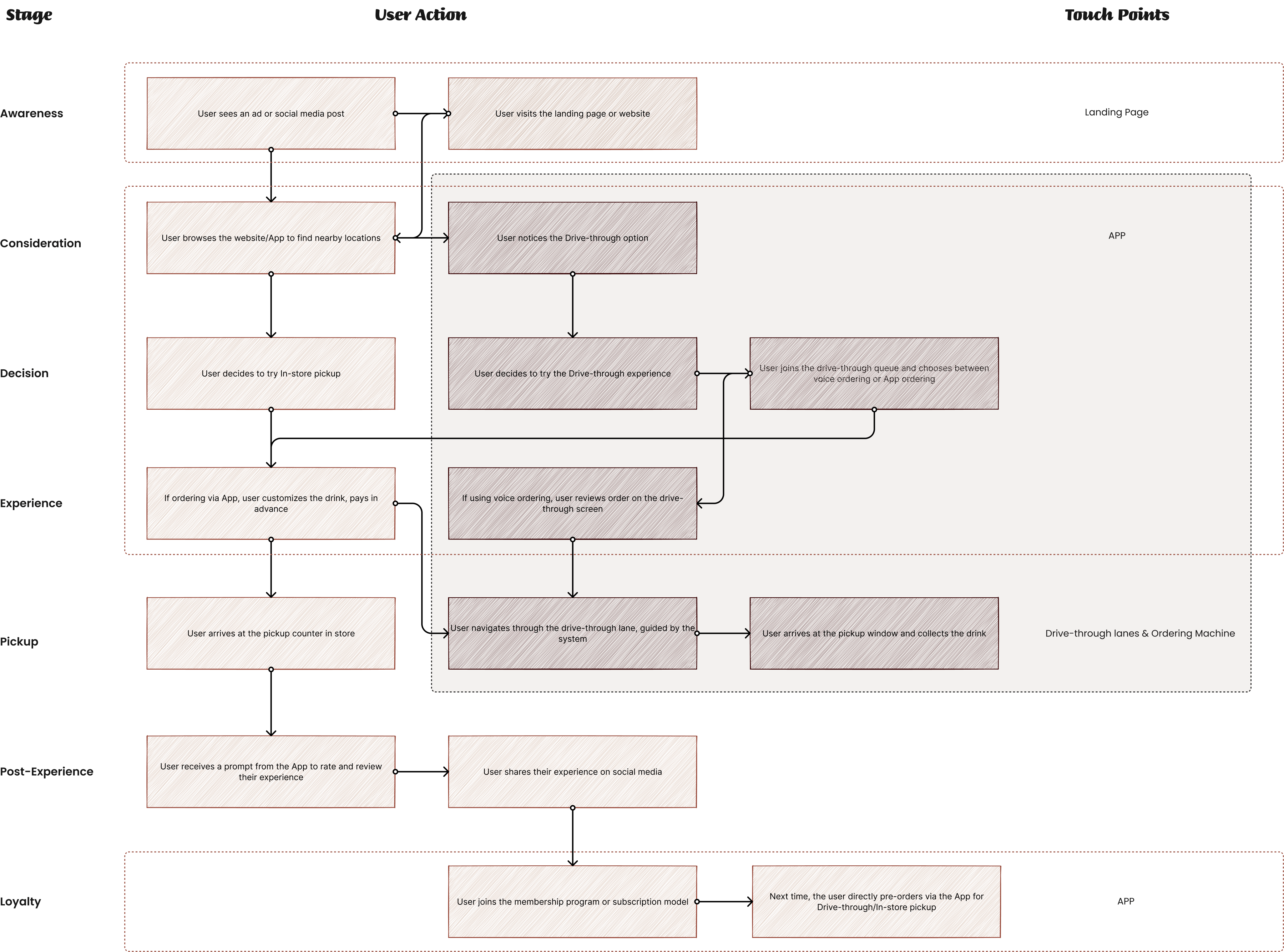
- Digital ordering rarely connects clearly with physical pickup behavior
Design Question

Product Thinking
Instead of designing a traditional menu interface, I reframed the experience around decision momentum.
Core hypotheses explored:
- Guided customization may reduce overwhelm compared to fully open menus
- Progressive disclosure supports mobile interaction better than dense dashboards
- Cultural storytelling should enhance, not slow, conversion paths
To inform direction, I analyzed patterns from mobile ordering ecosystems such as Amazon Fresh, Starbucks, and McDonald’s — focusing on interaction clarity rather than visual style.
Key Design Explorations
Progressive Customization Flow
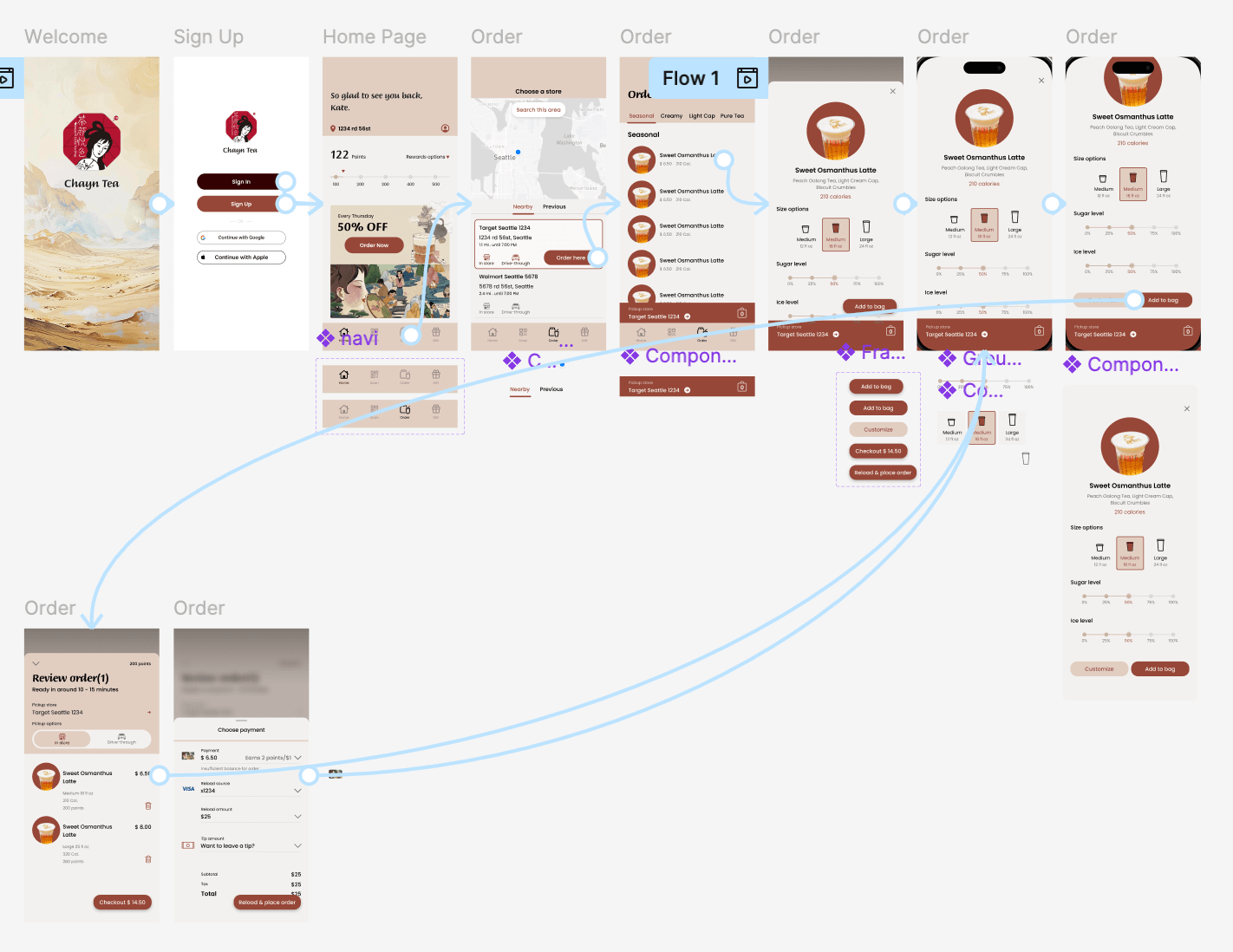
Rather than exposing all options simultaneously, the experience introduces drink customization step-by-step.
This exploration demonstrates how interaction pacing can help new users navigate unfamiliar products.
Trade-off explored:
Less upfront flexibility vs. faster decision-making.
Growth-Oriented Landing Experience
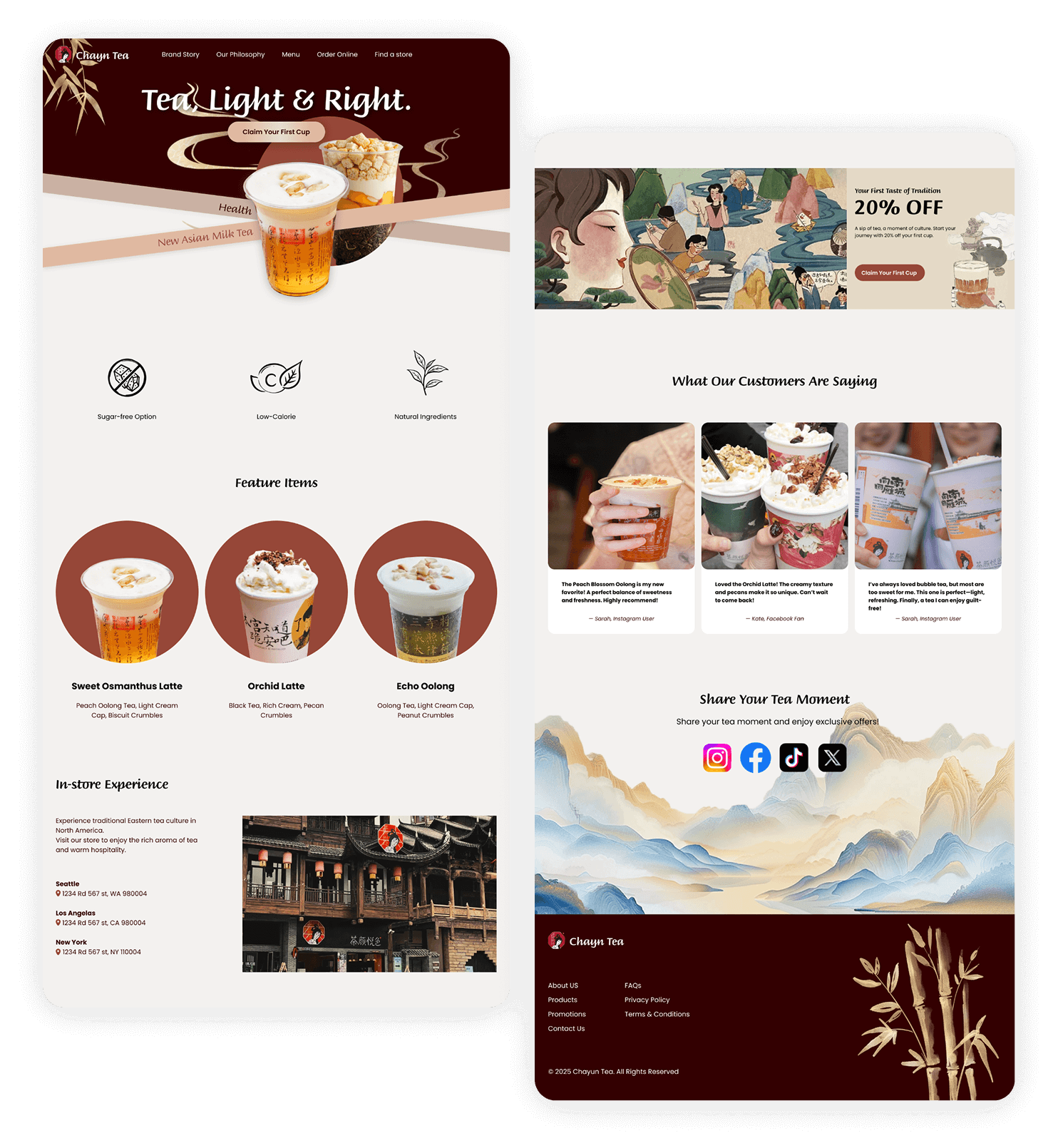
The landing screen balances brand storytelling with product discovery.
Instead of heavy promotional layouts, the interface surfaces:
- Best-selling items
- Visual entry points for cultural context
- Clear paths toward first purchase
This approach proposes how cultural brands might onboard Western audiences through familiar commerce patterns.
Digital-to-Physical Pickup Flow
The concept extends beyond checkout into the real-world journey.
Explorations include:
- Real-time order status
- QR-based pickup interaction
- Clear arrival guidance
This demonstrates how mobile UX could bridge digital ordering with in-store operations.
Constraints & Trade-Offs Explored
Because this is a concept project, I focused on design decision frameworks rather than implementation constraints.
Key tensions explored:
- Cultural richness vs. ordering efficiency
- Customization depth vs. cognitive simplicity
- Brand storytelling vs. conversion speed
These explorations shaped a modular interaction system adaptable across markets.
Design Impact (Conceptual Outcomes)
While not shipped as a live product, this project demonstrates:
- How progressive customization could reduce cognitive load
- How mobile-first IA can support global onboarding
- How UX strategy can align storytelling with commerce behavior
The value of this exploration lies in the product thinking process rather than measurable business metrics.
Reflection
This project strengthened my approach to:
- Designing context-aware commerce systems
- Balancing emotional design with performance-driven UX
- Thinking beyond screens — connecting mobile interaction with real-world service flows
These principles now influence my later work in adaptive dashboards, AI-assisted UX, and scalable e-commerce experiences.